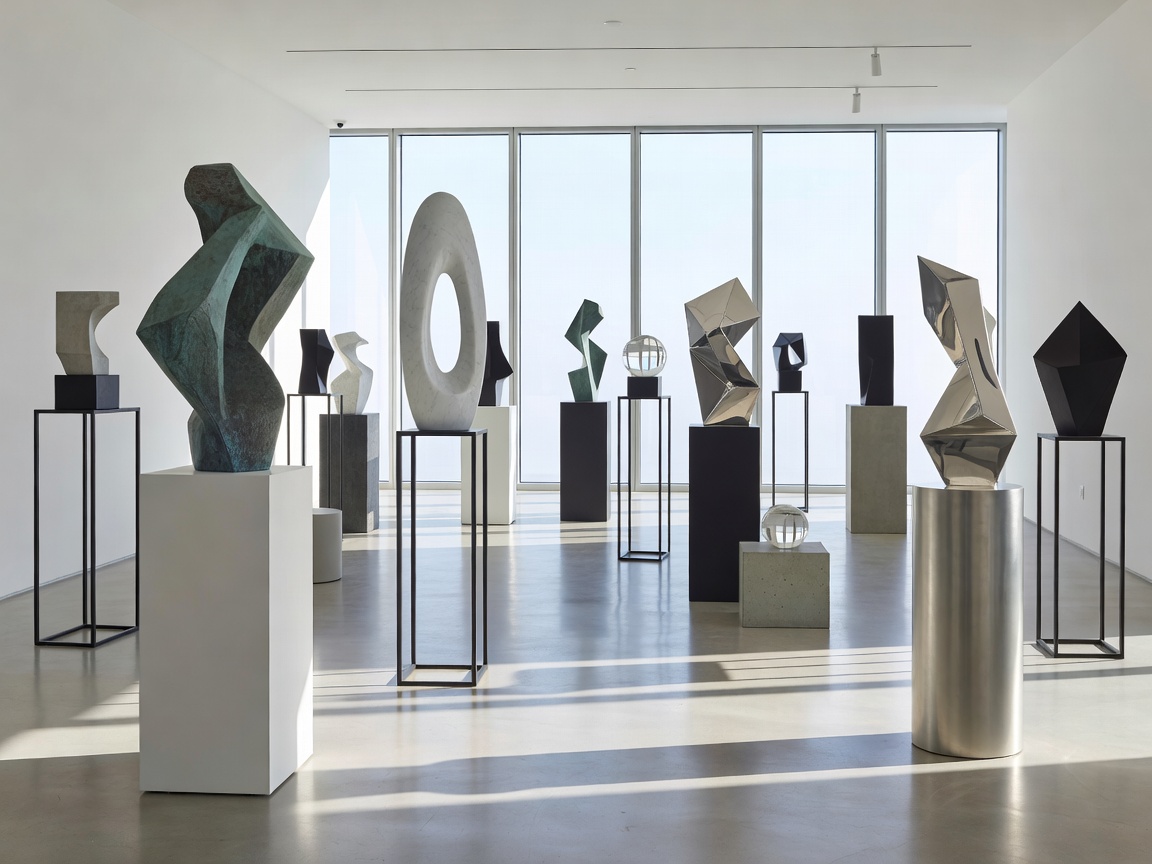
Display is a room-wide decision
Display setup considers each object and its surrounding space. Scale, sightline, visitor movement and the relationship between adjacent works are reviewed together rather than as isolated placements.
Formats and relationships
Wall-mounted works require measured positions and clear relationships to neighbouring works. Freestanding works and sculptures require attention to footprint, stability, viewing distance and circulation. Plinths add height and separation but also change sightlines and route widths.
There is no single spacing rule for every room. The appropriate arrangement depends on the approved layout, dimensions, access, safety requirements and the intended visitor experience.
Setup scope
- Read layout drawings and identify display zones.
- Position plinths and freestanding elements against the agreed plan.
- Coordinate wall works, labels and sightline checks.
- Review visitor circulation and clear approaches.
- Coordinate lighting positions with the responsible team.
- Check visual consistency across the completed room.
Labels and lighting
Labels should be placed consistently, remain readable and avoid competing with the work. Their location is checked against viewing height, wall composition and visitor flow.
Lighting coordination is practical rather than decorative. Direction, glare, shadows and access to fittings can affect the final arrangement. Lighting changes should be agreed with the relevant technical contact.
Good for
Gallery layouts, temporary exhibitions, sculpture rooms, plinth-based displays, wall groups and installation teams working from a defined spatial plan.
What to know
Display decisions depend on confirmed dimensions and site conditions. Structural, electrical and safety matters must be reviewed by the appropriate site specialists. We coordinate the visible setup and its checks without replacing those responsibilities.
Related services
Gallery Changeover Services →
Artwork Preparation & Handling →